Textured Turquoise Color Text Effect: A Comprehensive Evaluation
In the landscape of digital graphic design, achieving a specific aesthetic often requires more than just selecting a typeface. Designers frequently seek to imbue typography with depth, materiality, and visual interest that standard fonts cannot provide alone. One such solution gaining attention is the Textured Turquoise Color Text Effect. It is important to clarify immediately that this product is not a font file intended for general use in word processors or web browsers. Rather, it is a specialized font effect designed specifically for Adobe Illustrator. This distinction is critical for potential users to understand before attempting to integrate the tool into their workflow.
This evaluation explores the functionality, benefits, and limitations of this editable text effect. By understanding its technical requirements and creative applications, designers can determine if this asset aligns with their project goals. The following sections break down what the effect entails, why it might be necessary for certain projects, and how it compares to alternative methods of achieving similar results.
Understanding the Technical Nature of the Asset
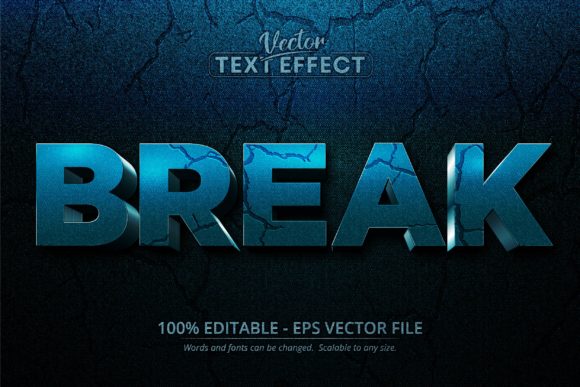
The core identity of the Textured Turquoise Color Text Effect lies in its format and compatibility. As an EPS CS6 file, it is constructed using vector-based paths and appearance attributes native to Adobe Illustrator. Unlike a TrueType (TTF) or OpenType (OTF) font that installs on a system and becomes available across all software, this effect exists as a template within the Illustrator environment. It utilizes complex layering, texture overlays, and color gradients to simulate a physical turquoise stone surface on top of editable text.
Because the effect relies on Illustrator-specific features, it cannot be opened or edited in other software packages like Photoshop, InDesign, or free vector tools. Users must have access to Adobe Illustrator, preferably version CS6 or later, to manipulate the content. Once opened, the file provides 100% editable capabilities, allowing the user to change the character set, adjust the size without loss of quality, and modify the underlying text structure while retaining the textured turquoise finish.
Reasons for Interest in Textured Effects
Why would a designer choose this specific effect over standard styling? The primary driver is the desire for high-fidelity realism without the time-consuming process of manual creation. Creating a convincing stone texture from scratch involves multiple steps: creating the base shape, applying noise filters, adding gradient meshes for depth, and manually painting highlights and shadows to mimic the irregularities of natural turquoise.
For professionals working under tight deadlines, the Textured Turquoise Color Text Effect offers a streamlined path to a polished look. It eliminates the guesswork associated with texture mapping and ensures that the turquoise hue remains consistent and vibrant. This is particularly valuable for branding projects, album covers, or promotional materials where a specific mood—often associated with luxury, nature, or southwestern themes—is required. The ability to scale the text to any size while maintaining the integrity of the texture makes it suitable for both small UI elements and large-scale billboards.
Benefits and Practical Advantages
- Full Editability: Despite the complex appearance, the text remains fully editable. Designers can swap out words, change kerning, or alter the font family (within the constraints of the effect's base shape) without breaking the texture.
- Scalability: Being a vector-based EPS file, the effect scales infinitely. There is no risk of pixelation when moving from a business card to a storefront sign.
- Consistency: Manual texturing often leads to inconsistencies between different letters. This effect ensures a uniform application of the turquoise texture across every character in a word.
- Time Efficiency: Utilizing a pre-made effect reduces production time significantly compared to building the style from scratch.
Tradeoffs and Considerations
While the advantages are clear, there are significant tradeoffs that must be considered during the selection process. The most prominent limitation is software dependency. If a client or collaborator does not have Adobe Illustrator, they cannot open or edit the file. This creates a bottleneck in collaborative workflows where cross-platform compatibility is essential.
Additionally, because the effect is tied to a specific file format, customization options may be limited compared to a fully manual approach. While the text is editable, the specific nuances of the texture—the exact shade of blue-green, the specific pattern of cracks, or the lighting angle—are predetermined by the creator of the effect. If a project requires a unique variation of turquoise that deviates from the preset, the user may need to apply additional effects manually, which could negate some of the time-saving benefits.
Situations Where This Effect Is a Strong Fit
The Textured Turquoise Color Text Effect is ideally suited for scenarios where speed, consistency, and vector scalability are paramount. It is an excellent choice for:
- Branding Packages: When a brand needs a logo or tagline that conveys a specific material feel but requires the file to be scalable for various media.
- Print Media: High-quality print jobs where the resolution must remain crisp at any size.
- Prototyping: Rapidly generating mockups for client presentations where the final texture will be refined later.
In these contexts, the ability to deliver a professional, textured look quickly without sacrificing vector quality makes this asset a practical tool.
When Alternatives May Be Worth Considering
There are circumstances where relying on this specific effect may not be the best decision. If the project requires broad accessibility, such as web graphics that need to be exported as PNGs or SVGs for immediate deployment, a raster-based texture or a manual CSS effect might be more appropriate. Furthermore, if the design brief demands a highly customized texture that differs significantly from the provided turquoise style, starting with a blank canvas and building the effect manually might offer greater creative freedom.
Users who do not own Adobe Illustrator should also consider alternatives. There are online generators or Photoshop actions that can simulate similar looks, though they may lack the vector precision of the EPS format. For those needing a permanent font installation rather than a temporary effect, purchasing a dedicated font that mimics this style (if available) would be the only viable option.
Decision-Making Insights
To determine if the Textured Turquoise Color Text Effect aligns with your needs, evaluate your current software stack and project constraints. Ask yourself if you have the necessary version of Illustrator and if the workflow allows for file transfer restrictions. If the answer is yes, the asset offers a robust solution for achieving a high-end, textured look efficiently.
However, if flexibility and universal compatibility are the highest priorities, the limitations of the EPS CS6 format may outweigh the benefits of the pre-built texture. Ultimately, this tool is a specialized instrument. It excels in specific environments where the Adobe ecosystem is active and the goal is to replicate a realistic material finish with minimal effort. By weighing the requirement for vector scalability against the constraint of software dependency, designers can make an informed choice that balances creative vision with technical reality.